
Police said the 79-year old Kerala-based seer Kesavananda Bharati Sripadagalvaru died at the Edaneer Mutt in Kasaragod due to age related ailments. The case in which Bharati had challenged a Kerala Land Reform Act nearly four decades ago set the principle that the Supreme Court is the guardian of the basic structure of the Constitution and the verdict involved 13 judges the largest bench ever to sit in the apex court.
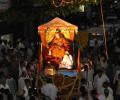
In 1970, Bharati, the hereditary head of Edneer Hindu 'Matha' in Kasaragod district of Kerala, had moved the top court challenging the state government's two land reform Acts meant to restrict the management of religious properties. The case had a number of firsts to its credit.
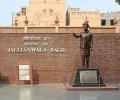
Former Supreme Court judge Justice Rohinton Nariman has warned that events similar to the Jallianwala Bagh massacre could occur if the 'basic structure' doctrine of the Constitution is diluted. In his new book, 'The Basic Structure Doctrine: Protector of Constitutional Integrity,' Nariman argues that the 1973 Kesavananda Bharati judgment, which established the doctrine, is essential for protecting fundamental rights and preventing constitutional amendments that could lead to such tragedies. Nariman's concerns are echoed by Supreme Court judge Justice K V Viswanathan, who applauds the book for its "chilling clarity" and underscores the importance of the Kesavananda Bharati ruling. The book provides a detailed analysis of the doctrine and its implications, highlighting the robustness of the Kesavananda Bharati judgment and the lack of a compelling alternative theory.

The Supreme Court on Friday asked the Law Commission to consider a plea as a representation of a Buddhist group that certain sets of personal Hindu laws, which are applicable to Buddhists also, are against their fundamental rights, including freedom to practice religion.
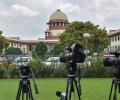
The Supreme Court on Monday dedicated a web page containing details of arguments, written submissions and the judgment in the historic Kesavananda Bharati case which laid down the path-breaking concept of the 'Basic Structure' of the Constitution.
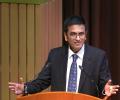
Chief Justice of India DY Chandrachud on Tuesday remarked that once judges demit office whatever they say is just opinion and is not binding, after former CJI Ranjan Gogoi's comments that the basic structure doctrine was debatable was flagged in the Supreme Court.
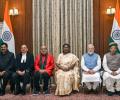
The Supreme Court's opinion on the presidential reference can impact on any number of cases if and when governors, if not the President, take a literary view of the Supreme Court's 'ppinion' on their 'discretionary powers' without reference to the rider on 'reasonable time', points out N Sathiya Moorthy.
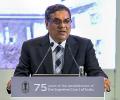
Justice Khanna was elevated as an additional judge of the Delhi high court in 2005 and was made a permanent judge in 2006. He was elevated as a judge of the Supreme Court on January 18, 2019.
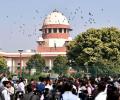
In a significant verdict, the Supreme Court by a majority of 7:2 on Tuesday held all private properties cannot form part of "material resources of the community" empowering states to take them over for distribution to serve "common good" under the Constitution.
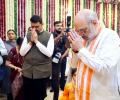
'Devendra Fadnavis is stating that Marathas must feel OBCs are not happy with reservations for the Marathas and therefore they are protesting.'
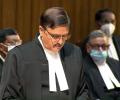
Justice Abhay S Oka, known for his unwavering commitment to liberty and constitutional values, bid farewell to the Supreme Court of India. In his final address, he stressed his dedication to upholding constitutional liberties, emphasizing that it was his "honest endeavor" to fulfill the dream of the Constitution's framers. He also expressed gratitude to the bar and his colleagues for their support and shared heartfelt memories from his time on the bench. Justice Oka's departure marks the end of a distinguished judicial career spanning over two decades, during which he served as a judge of the Bombay High Court, Chief Justice of the Karnataka High Court, and ultimately, as a Supreme Court justice.

He will take oath on November 11, a day after incumbent Justice DY Chandrachud demits office on attaining the age of 65.

The remarks by the CJI came against the backdrop of the recent remarks by Vice President Jagdeep Dhankhar who questioned the landmark 1973 Kesavananda Bharati case verdict that gave the basic structure doctrine.
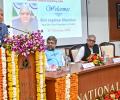
Vice President Jagdeep Dhankhar has questioned the Chief Justice of India's involvement in executive appointments, specifically citing the selection of the CBI director. He believes this practice undermines democratic principles and calls for revisiting the existing norms. Dhankhar also raised concerns about the "doctrine of basic structure", suggesting it has a debatable jurisprudential basis. He emphasized the importance of each institution operating within its constitutional boundaries and highlighted the need for coordinated autonomy. The vice president also discussed the need for a balanced approach to judicial review and the importance of judges focusing on judgments rather than other forms of expression. He stressed the need to revisit the current state of affairs to restore the judiciary's sublimity.

Chief Justice of India DY Chandrachud has set in motion the process of appointment of his successor by recommending to the Centre the name of senior-most Supreme Court judge Justice Sanjiv Khanna.
Some of his directives had the Supreme Court judges disclose their assets whereas the row over the discovery of cash from a sitting judge's official residence paved way for inquiry.

Away from the courtroom and legal circles, Nariman was a familiar figure for residents of Hauz Khas who would see him walk regularly, even in the cold winter months of December and January.

'The ruling does not automatically mean that your house can be taken away, but suppose it blocks an expressway or a highway or such essential development, then it can be taken away as long as there is a law to support that action.'

Parliamentary sovereignty cannot be permitted to be diluted or compromised by the executive or the judiciary, he said in his strongest remarks yet against alleged judicial interference in the working of Parliament.

Justice Khanna, who will serve as CJI for a little over six months, will demit office on May 13, 2025.

The judgment was reserved after a marathon hearing which went on for 38 days spanning four months.
The lawyers' body has moved the top court challenging the Bombay high court's February 9 order dismissing its plea on the ground that it was not a fit case to invoke the writ jurisdiction under Article 226 of the Constitution.

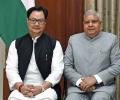
oved the Supreme Court against a high court decision dismissing its PIL against Union Law Minister Kiren Rijiju and Vice President Jagdeep Dhankhar for their remarks on judiciary and the collegium system for appointment of judges.
The plea came up for hearing before a bench of Justices SK Kaul and A Amanullah.

Justice Sanjiv Khanna, who has been part of several landmark Supreme Court judgements such as scrapping the electoral bonds scheme and upholding abrogation of Article 370, will be sworn in as the 51st Chief Justice of India on Monday.

Vice President Dhankar's and Law Minister Rijuju's recent interventions have the danger of destabilising the Constitutional equilibrium, cautions N Sathiya Moorthy.

'This bitterness will be more in Jammu area than in Kashmir.'

'I came for my national service. I am the son of people like Gandhiji, Nehru, Patel, Dr Ambedkar and Maulana Azad.'

Sorabjee had been honoured with Padma Vibhushan in 2002 for his defence of the freedom of expression and the protection of human rights.

It is in circumstances like this that the Constitution becomes extremely important. It reminds us that we have a commitment towards higher human values to fulfil, a path to get back to, suggests Shyam G Menon.Else, we risk being rudderless in an ocean of money and majoritarianism, suggests Shyam G Menon.
Is there no mechanism to abrogate Article 370 even when the people of Jammu and Kashmir want it, the Supreme Court asked on Thursday and wondered if the now repealed provision can't be touched, will it not amount to creating a "new category" beyond the basic structure of the Constitution.
A key argument against the Aadhaar scheme was that it was violative of the nine-judge bench verdict that had held that Right to Privacy is a fundamental right under the Constitution.

'The government, through the media, is saying that everything is normal in Kashmir, but I just want them to give this in writing and let a judicial commission see it.

'Soli steadfastly believed in Voltaire's famous dictum that he would disagree violently with anyone but defend to death that person's right to disagree with him.'
'KBC *is* Amitabh Bachchan. He is so courteous, he pulls out the chair for you and makes you feel like a queen.'
Tamil Nadu's unending legislative fight for exemption from NEET has now flagged the question if it's time to review the Supreme Court's famous verdict in the 'Mandal case', fixing 50-per cent upper-limit for all reservations, asks N Sathiya Moorthy.

Internal to Aadhaar itself, within the very design and usefulness of the project, lies the division between the clashing images of India.

'Parsis are brought up with a great sense of the importance of truth and speaking your mind.'

'My question is not why he has accepted the governorship, my question is why did the government offer it to him? By his accepting it, an impression is sought to be created that judges are no better than anyone else and will accept anything.' Fali Nariman, the legendary lawyer, speaks on the controversy over the National Judicial Appointments Bill and former Chief Jusice P Sathasivam's appointment as Kerala governor in an exclusive interview.

It emerges that not only does the CIDR project fails the test of fairness, justness and reasonableness besides the test of not being fanciful, oppressive or arbitrary; it also fails the test of Arthashastra, Hadith and the Bible.
 © 2026 Rediff.com - Advertise with us - Disclaimer - Privacy Policy - Sitemap - Feedback - About us - Terms of use - Grievances